Advanced AI Image Generation Prompts: Expert Techniques for Quality Visual AI Tools
High-quality AI image generation requires more than generic prompts. Master advanced techniques like structured prompting, parameter control, and style anc

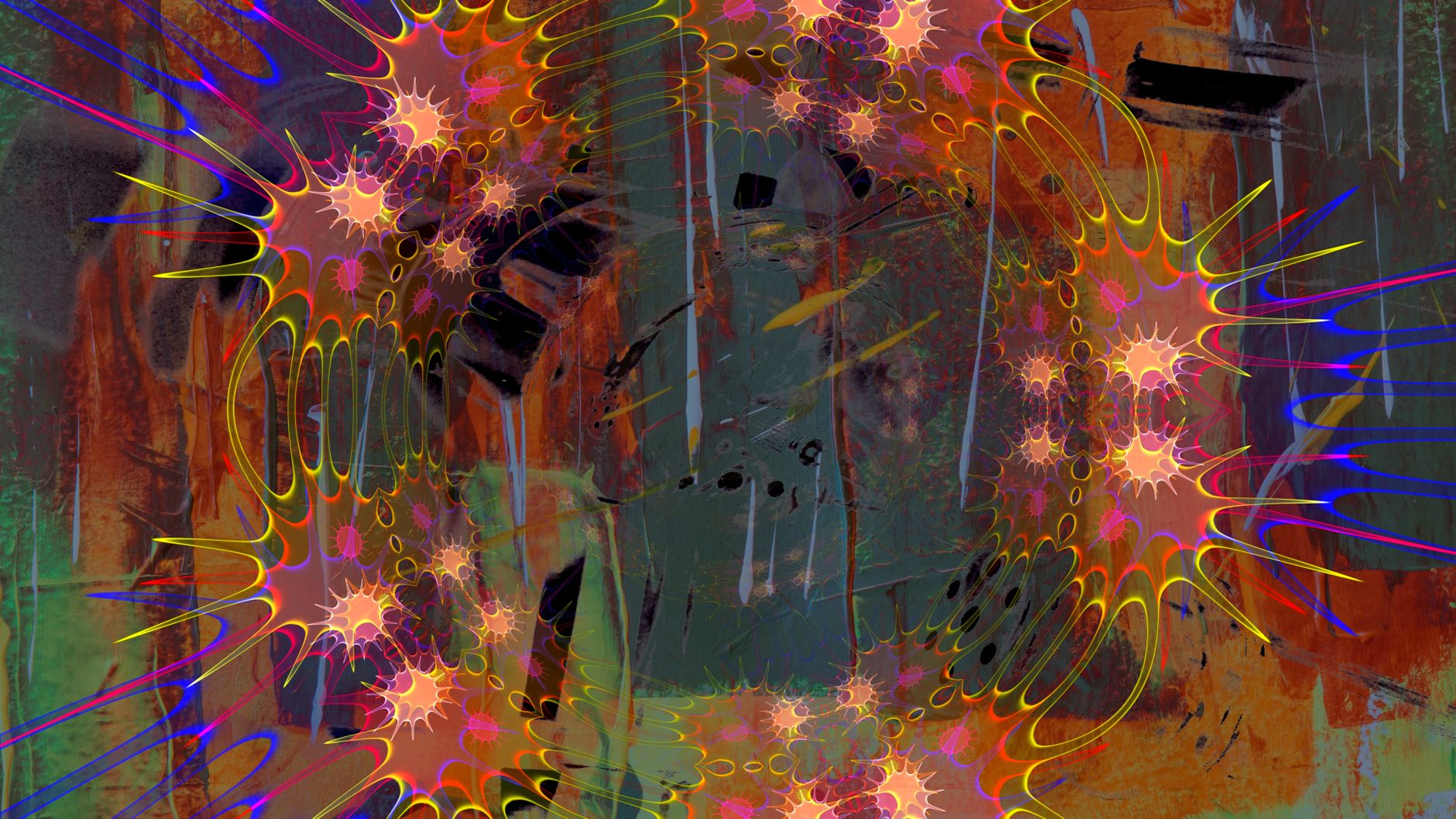
High-quality AI image generation requires more than generic prompts. Master advanced techniques like structured prompting, parameter control, and style anchoring to create consistent, professional results across Midjourney, Flux AI, and other visual AI tools.
Byline: Copy&Prompt TEAM · Published October 2024 · Updated October 2024
Direct Answer: Advanced AI image generation relies on four core prompt engineering techniques: (1) explicit style and parameter anchoring for reproducibility, (2) layered contextual prompts combining subject, lighting, and composition, (3) iterative refinement using seed values and variation controls, and (4) model-specific syntax adaptation for tools like Midjourney, Flux AI, and DALL-E 3. Each technique addresses common failure modes such as style drift, low coherence, and inconsistent detail levels.
Table of Contents
- Core Techniques for Prompt Precision
- Mastering Midjourney Prompts
- Flux AI Prompt Engineering
- DALL-E 3 and Beyond
- Tool Comparison Matrix
- Common Mistakes and Fixes
- Limitations and Model Constraints
- Scaling Up: Systematic Prompt Management
- Frequently Asked Questions
Core Techniques for Prompt Precision
Creating high-quality AI images starts with understanding that visual generation models don't interpret language the same way text models do. They rely heavily on pattern recognition and statistical associations. This means that every word matters—and so does the order and structure of your prompt.
Layered Prompt Structure: The most effective prompts follow a predictable hierarchy:
- Subject: What is the main focus?
- Style: What artistic movement or medium?
- Lighting: How is the scene illuminated?
- Composition: Camera angle, framing, depth of field
- Details: Color palette, texture, atmosphere
- Parameters: Resolution, aspect ratio, stylization weight
Style Anchoring: Always specify both the genre and the reference artist or era. Instead of saying "impressionist painting," try "impressionist painting inspired by Claude Monet, 1890s." This anchors the model to a specific visual vocabulary.
Lighting Control: Lighting dramatically affects mood and realism. Use terms like "golden hour," "dramatic chiaroscuro," or "neon-lit cyberpunk alley." Pair with time of day or weather conditions for added specificity.
Parameter Awareness: Different tools use different syntax. Midjourney uses double colons for weight control (::2), while Flux AI uses native parameter tags. Understanding these differences prevents wasted iterations.
Annotated Example Prompt
Here's a layered prompt for generating a fantasy landscape:
Subject: A floating island with cascading waterfalls
Style: Hyperrealistic digital painting, inspired by Studio Ghibli
Lighting: Soft morning light with mist rays filtering through clouds
Composition: Wide-angle view from below, dramatic perspective
Details: Lush green vegetation, water sparkling with sunlight, distant mountains
Parameters: 16:9 aspect ratio, high resolution, cinematic quality

Why it works: Each component narrows the model's interpretation space while maintaining creative flexibility. The artist reference provides a consistent visual anchor.
Mastering Midjourney Prompts
Midjourney remains one of the most popular AI image generation tools, particularly prized by creative prompters for its artistic interpretation capabilities. However, its strength—creative ambiguity—can become a weakness without proper control mechanisms.
Version Selection: As of late 2024, Midjourney's V6 model introduced significant changes to prompt interpretation. Unlike V5, which responded well to descriptive prose, V6 requires more structured input with explicit style references. Always specify the model version when documenting successful prompts.
Weight Control: The double-colon syntax (::) allows you to emphasize or de-emphasize parts of your prompt. For example:
A steampunk airship (::2) flying over a Victorian city (::0.5) --ar 16:9 --v 6.0In this example, the airship is twice as important as the city background. This technique is crucial when certain elements aren't appearing in generated images.
Negative Prompts: While Midjourney doesn't have a dedicated negative prompt field, you can embed negative instructions directly in the prompt:
A serene mountain landscape, photorealistic, detailed --no people, buildings, textSeed Reproducibility: Using the --seed parameter locks randomness, allowing you to reproduce exact results or make subtle variations:
A mystical forest at twilight, ethereal lighting --seed 12345 --v 6.0Aspect Ratio and Quality: Midjourney supports various aspect ratios and quality multipliers. Higher quality settings (e.g., --q 2) produce more detailed images but consume more GPU minutes.
Midjourney Prompt Template
Use this framework to construct reliable Midjourney prompts:
[SUBJECT], [STYLE/REFERENCE ARTIST], [LIGHTING], [COMPOSITION], [DETAILS]
--ar [RATIO] --v [VERSION] --q [QUALITY] --seed [NUMBER]

Example:
An ancient library filled with magical books, fantasy illustration inspired by Alan Lee,
warm candlelight casting shadows, wide interior shot with depth of field, ornate details
and glowing runes --ar 3:2 --v 6.0 --q 2 --seed 8675309
Flux AI Prompt Engineering
Flux AI represents a newer generation of image generation models, offering faster inference times and improved prompt adherence compared to earlier architectures. Its training on diverse datasets gives it broad capabilities across multiple domains.
Native Parameter Handling: Unlike Midjourney, Flux AI uses a more natural language approach to parameter specification. Instead of special syntax, you simply describe your desired output characteristics:
A cyberpunk cityscape at night, ultra-detailed, 8K resolution, sharp focus,
cinematic lighting, dramatic contrasts, wide angle shot
Strength and Style Tags: Flux AI responds well to explicit strength indicators and style tags. These help guide the model toward desired outcomes:
strength0.75
Learn how Copy&Prompt helps manage these workflows.
Scheduler Selection: Flux offers multiple schedulers (Euler, DPM++, LMS) that affect noise scheduling and final image quality. For photorealistic outputs, the Euler scheduler often produces cleaner results, while DPM++ excels at artistic interpretations requiring more creative freedom.
Steps and Guidance: Flux allows fine-tuning through step count and guidance scale parameters. Higher step counts improve detail fidelity but increase processing time. A guidance scale of 7-9 typically balances prompt adherence with natural variation.
Multi-modal Conditioning: Flux uniquely supports combining text and image prompts. You can provide an initial sketch or reference image alongside your text prompt, allowing for hybrid creation workflows that blend human creativity with AI enhancement.
Flux AI Configuration Best Practices
For consistent, high-quality outputs from Flux AI, follow these recommendations:
- Use strength values between 0.6–0.8 for balanced creative control
- Set guidance scales between 7–9 for optimal prompt adherence
- Employ Euler or DPM++ schedulers depending on desired output style
- Leverage multi-modal conditioning for precise composition control
- Always specify resolution requirements explicitly in the prompt
DALL-E 3 and Beyond
OpenAI's DALL-E 3 introduced significant improvements in prompt understanding and image quality. Unlike earlier versions that struggled with complex prompts, DALL-E 3 excels at interpreting nuanced instructions and producing detailed, contextually accurate results.
Prompt Clarity: DALL-E 3 performs best with clear, unambiguous language. Avoid overly poetic descriptions that might confuse interpretation. Instead, focus on concrete visual elements:
Photo of a golden retriever wearing a red firefighter helmet, standing
next to a fire truck, suburban neighborhood background, afternoon sunlight
Cultural Sensitivity: DALL-E 3 incorporates robust safety filtering and cultural awareness. When generating human figures or culturally significant imagery, ensure descriptions are respectful and appropriate.
Iterative Refinement: One of DALL-E 3's standout features is its ability to refine outputs based on feedback. If the initial generation doesn't meet expectations, you can provide additional context or corrections, and the model will adapt accordingly.
Beyond these major platforms, numerous specialized tools cater to specific niches:
- Stable Diffusion: Open-source flexibility with extensive customization options
- Leonardo AI: Game asset and character design focused workflows
- Adobe Firefly: Integration with Creative Cloud applications
- Bing Image Creator: Free tier access leveraging DALL-E technology
Each platform has unique strengths and optimal use cases. Professional creatives often combine multiple tools in their workflow, using one for initial concept development and another for final polish.
Visual AI Tools Comparison Matrix
Selecting the appropriate tool for your project requires understanding each platform's strengths and limitations:
| Tool | Image Quality | Prompt Adherence | Creative Flexibility | Cost Considerations | Ideal Use Case |
|---|---|---|---|---|---|
| Midjourney V6 | Very High | Moderate-High | High | $10-120/month tier | Artistic concepts, stylized imagery |
| Flux AI | High | Very High | Moderate-High | Free tier available | Photorealistic content, precise control |
| DALL-E 3 | High | Very High | Moderate | 15 credits free, then pay-per-use | Rapid prototyping, commercial applications |
| Stable Diffusion | Variable | High | Very High | Open source (local compute cost) | Custom model training, developer workflows |
| Leonardo AI | High | High | Moderate | $10-80/month | Game assets, character design |
Decision Framework: For artistic exploration where style interpretation is valued, Midjourney often leads. For commercial work requiring exact prompt matching, DALL-E 3 and Flux AI provide superior control. Stable Diffusion remains unmatched for deep customization and model training capabilities.
Common Mistakes and Fixes
Even experienced creative prompters fall into predictable traps that degrade image quality and consistency:
Mistake: Overly Complex Prompts
Problem: Packing too many unrelated elements into a single prompt confuses the model's interpretation priorities.
Fix: Focus on 3-5 key elements maximum. Let the model excel at what's most important rather than diluting its attention across competing details.
Mistake: Ignoring Aspect Ratios
Problem: Using default square crops when rectangular compositions would better serve the subject matter.
Fix: Always specify the intended viewing format. Panoramic scenes benefit from ultra-wide ratios, portraits from vertical formats, product shots from standard photo dimensions.
Mistake: Vague Style References
Problem: Saying "realistic" or "artistic" without grounding these concepts in specific visual references.
Fix: Reference specific artists, movements, photography styles, or film genres to anchor the model's interpretation within familiar creative traditions.
Mistake: Neglecting Negative Space and Composition
Problem: Focusing only on the main subject while ignoring how it interacts with its environment.
Fix: Describe the entire visual field—background, foreground, negative space, and compositional elements that guide the viewer's eye through the image.
Limitations and Model Constraints
Despite remarkable advances, current AI image generation models face fundamental constraints that practitioners must acknowledge:
Anatomical Accuracy Challenges
Human figures, particularly hands and feet, remain problematic across all major platforms. Even state-of-the-art models occasionally generate anatomical impossibilities. Professional workflows now routinely include dedicated correction phases using traditional editing software.
Text Rendering Limitations
Incorporating legible text within generated images continues to challenge AI models. While improvements have been made, expect to manually recreate signs, labels, or typographic elements in post-production for professional-grade deliverables.
Cultural and Demographic Bias
Training datasets inevitably reflect historical and contemporary biases present in source materials. Outputs may inadvertently reinforce stereotypes or disproportionately represent certain demographics. Critical review and intentional prompting help mitigate these issues.
Legal and Ethical Considerations
The legal landscape surrounding AI-generated imagery remains fluid. Questions of copyright ownership, trademark implications, and right-of-publicity concerns require careful consideration, especially for commercial applications. Consult legal counsel when venturing into sensitive territory.
Scaling Up: Systematic Prompt Management
As creative projects grow in scope, managing dozens or hundreds of prompts becomes a logistical challenge. Successful studios and individual creators implement systematic approaches to prompt organization and version control.
Version Control for Prompts
Treat prompts as code—with version tracking, branching strategies, and documentation. This prevents the common scenario where a successful prompt is accidentally modified and its effectiveness lost forever.
Prompt Libraries and Templates
Develop reusable frameworks that can be quickly adapted for different projects. Templates ensure consistency while reducing the cognitive load of constructing complex prompts from scratch each time.
Collaboration Workflows
In team environments, establish clear protocols for prompt sharing, feedback incorporation, and result evaluation. Regular retrospectives on prompt performance help identify optimization opportunities.
Copy&Prompt is a prompt library that lets you optimize, store, share and copy prompts in one click across ChatGPT, Claude, Gemini, DeepSeek, Lovable and Midjourney. By centralizing prompt management, teams can maintain consistency while accelerating their creative workflows.
Key Takeaways
- Advanced AI image generation requires structured prompts with layered components: subject, style, lighting, composition, and parameters.
- Midjourney excels at artistic interpretation but requires specific syntax for weights, seeds, and aspect ratios.
- Flux AI offers superior prompt adherence with natural language parameter handling and multi-modal conditioning.
- Tool selection should align with project requirements—Midjourney for art, DALL-E 3 for precision, Stable Diffusion for customization.
- Systematic prompt management prevents drift, enables team collaboration, and ensures reproducible creative workflows.
Next Step
Build a personal prompt library using structured templates and begin testing variations systematically. Track which approaches consistently produce the highest-quality results for your specific creative needs.
Frequently Asked Questions
How do I choose between Midjourney and Flux AI for my project?
Choose Midjourney for artistic exploration where interpretive flexibility enhances results. Select Flux AI when precise prompt adherence and photorealistic outputs are priorities. For rapid prototyping, consider DALL-E 3's superior text understanding.
What's the difference between stylization and quality parameters?
Stylization controls how much the model interprets creatively versus literally. Quality affects rendering detail and GPU resource consumption. Higher stylization produces more artistic interpretations, while higher quality yields finer detail at greater computational cost.
Conclusion
The landscape of AI image generation continues its rapid evolution, with each new release pushing boundaries in resolution, prompt comprehension, and creative interpretation. Yet beneath technological advancement lies a timeless principle: mastery comes not from chasing every new feature, but from developing disciplined prompting practices that maximize reliability and creative potential.
For creative professionals working across Midjourney, Flux AI, DALL-E 3, and emerging platforms, implementing structured prompt frameworks becomes essential infrastructure. This approach ensures that breakthrough discoveries don't disappear into the chaos of scattered chat histories and forgotten notebook entries.
As generative AI reshapes creative workflows, the ability to consistently reproduce high-quality results transforms from competitive advantage into baseline expectation. Organizations investing in systematic prompt management today position themselves to scale creative output efficiently while maintaining brand consistency across increasingly sophisticated AI toolchains.
Improve your AI results today - Create better prompts and get more accurate responses with Copy&Prompt. Copy&Prompt →

